
What if managing type 1 diabetes didn’t require daily insulin injections, pump site changes, or constant decision-making?
Researchers at Massachusetts Institute of Technology are working on a device that might one day make that possible, and it’s about the size of a postage stamp.
In early animal studies, this small implant kept insulin-producing cells alive and working for up to 90 days — without the need for immunosuppressant drugs.
That’s a big deal.
Why Islet Cell Transplants Haven’t Worked for Most People
The idea behind this research isn’t new. For years, scientists have known that transplanting insulin-producing islet cells can restore normal blood sugar levels in people with type 1 diabetes.
In some cases, patients have even achieved long-term insulin independence.
So why isn’t this already a widespread treatment?
Because of one major barrier: immunosuppression.
To prevent the body from attacking transplanted cells, patients must take drugs that suppress their immune system. These medications increase the risk of infections, cancer, and other serious complications — making them too risky for most people with diabetes.
JOIN THE DIABETES NERD NETWORK
The Core Problem: Oxygen
Researchers have tried to solve this by placing transplanted cells inside protective devices that shield them from the immune system.
But that creates a new problem. Those same barriers also block oxygen, and without oxygen, the cells die. This has been one of the biggest roadblocks in turning islet cell therapy into a practical, scalable solution.
The Breakthrough: A Device That Makes Its Own Oxygen
MIT’s new device tackles this problem in a surprisingly elegant way:
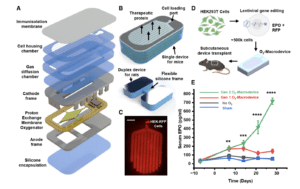
It generates its own oxygen inside the body.
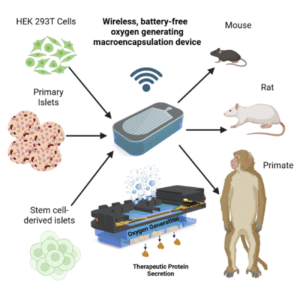
Using a built-in system, the device splits water vapor naturally present in the body into hydrogen and oxygen. The oxygen is delivered directly to the insulin-producing cells, keeping them alive and functional.
Meanwhile, the hydrogen safely diffuses out of the device.
Even more impressive, the system is powered wirelessly using an external antenna placed on the skin. This meanss there are no internal batteries or wired connections.
What Happened in the Study
In diabetic mice and rats, the results were pretty impressive:
- Blood glucose levels remained in a healthy range for up to 90 days
- No immunosuppressant drugs were used
- When the device was removed, blood sugar levels returned to diabetic ranges
This strongly suggests the implanted cells were doing exactly what they’re supposed to do: produce insulin in response to the body’s needs.
The team also tested the device in a monkey for one month. The transplanted cells survived and showed no signs of immune rejection, which is an encouraging step toward eventual human trials.
Not So Fast: What Still Needs Work
 As exciting as this is, it’s important to keep our feet on the ground here.
This research is still in the early stages, and several challenges remain:
- Fibrosis (scar tissue): The body naturally forms a barrier around foreign objects, which can slow insulin and glucose exchange
- Slower response times: The system doesn’t yet match the speed of a healthy pancreas
- Limited long-term data: Especially in larger animals and humans
- No human trials yet
Researchers are now working toward extending the lifespan of these implants — potentially up to years instead of months.
Why This Matters
If this technology eventually works in humans, it could dramatically change life with a T1D diagnosis.
Imagine:
- No daily injections
- No pump sites
- No need for immunosuppressant drugs
- Less constant mental load
Yes, a functional cure.
Bigger Than Diabetes
This technology could also go far beyond insulin. The same platform might one day be used to deliver other therapies, like enzymes, antibodies, or hormones. The cool part here is that these medications would be managed directly from inside the body.
In other words, instead of taking medications regularly, your body could produce them for you.
The Bottom Line
This implant isn’t ready for humans yet, but it represents a meaningful step forward in one of the most important challenges in diabetes care.
Yes, we must continue taking our insulin, but research like this suggests it might not be as far away as it once seemed.

Ginger Vieira has lived with type 1 diabetes since 1999 along with a few other chronic illnesses! She is the Cofounder of the Diabetes Nerd Network and the Diabetes Nerd Marketing agency. Ginger has authored hundreds of articles and several books, including Exercise with Type 1 Diabetes, Pregnancy with Type 1 Diabetes, Dealing with Diabetes Burnout, and Stop Overeating During Lows. Over her 20-year career (so far) in diabetes, she’s produced hundreds of articles and videos about life with diabetes. Her background includes a Bachelor of Science in professional writing and certifications in coaching, personal training, powerlifting, and Ashtanga yoga. Find Ginger’s YOUTUBE, PODCAST, INSTAGRAM, and LINKEDIN.